And That’s a Wrap..

Hello everyone! Welcome back to my final blog.

This blog will be different to any of the other blogs on my blog so far, as it is my last! Over the past ten weeks, I have thoroughly enjoyed sharing the information that I have gathered from the module LI4113 with you all. However, I must now call it a day and leave you with this final one. In this blog, I will reflect on my entire blogging experience, as it was a very new one indeed. Before this, I didn’t even understand how to go about writing a blog, never mind having my own blog posted weekly! Now I can confidently write in a blog style of writing with ease, and this is something that I am glad of acquiring.

Image result for academic

When I first begun blogging, I saw it as a tedious chore if I’m honest, but only because I was uncomfortable with this style of writing. It is uncommon as a university student to be asked to write in an informal manner as part of a graded assignment, but I have to say it was a good experience to have. Not only that, it was a good way of analyzing and assessing the information that I learned in lectures and labs. As it was done weekly, it really gave me a chance to look over lecture and lab notes. I think that this was an efficient way of processing the information, as it does not all go into our heads throughout classes. Blogging, really, is a way of forcing yourself to learn what you don’t know, and a way of articulating what you do know (Fishbien, 2014).

Image result for blogs

At times, of course, it felt tedious having to upload blogs weekly, as the weeks were closing in on us. Saying this, once I delved in to the topic, I did not feel this way. Moreover, it can be difficult to condemn all the information we cover into a short word-count, but again, this is a skill I acquired over the weeks. I think that the blog I got most creative with is probably the one from last week, purely because it involved us making a ‘Padlet’. However, I think the whole blogging experience overall allowed us to be that little bit creative, considering it differs immensely in the formal style of writing we are used to.

To wrap things up, I would like to thank you all for taking the time to read my blogs weekly. Receiving comments on my blogs was a rewarding feeling to say the least, and for that, I thank whoever who took the time to do so. Blogging, for me, was a foreign concept and now I can say that it is something I have a substantial amount of experience with and something that I would definitely not rule-out doing in the future. It is a way of winding down, in a way, while you process information learned in class, as I mentioned above. Some blogs, may of even felt therapeutic, but this happens to be a reason why people say blogging is ‘good for you’ (Wapner, 2008). I hope you all feel the same about your own blogging experience.

Until some time in the future,

Alison

Bibliography:

Fishbien, M.B. (2014) ’10 Reasons You Should Start Blogging’, The Blog, Jul 14, available: https://www.huffingtonpost.com/michael-b-fishbein/10-reasons-you-should-sta_b_5326353.html?guccounter=1 [accessed 28 Nov 2018].

Wapner, J. (2008) ‘Blogging–It’s Good For You’, Scientific American, June 1, 1, available: https://www.scientificamerican.com/article/the-healthy-type/ [accessed 28 Nov 2018].

DGBLL-An Evaluation of My Chosen Game for Language Learning.

Hello Everyone! Welcome back to my blog.

In this weeks blog, I will be taking a different approach and I will be redirecting you to my ‘Padlet’. In this ‘Padlet’, I will evaluate my chosen game, ‘4pics1word’, which I find useful with regards to language learning, and compare it to another game that I don’t find as useful. That game being ‘Sims’. I will discuss the features in which I feel contribute to language learning and why it differentiates from other games.

LINK TO MY PADLET: https://padlet.com/17221781/wuv1ru2nmdyi

Through using Padlet, I hope to clearly discuss the reasons why I would recommend my chosen game, ‘4pics1word’. I hope you find this game useful! Feel free to comment any questions that you may have below.

Until next time,

Alison

Image result for padlet

The Unsocial side to Social Media..

Hello everyone! Welcome back to my blog.

In this weeks blog post, I will be analyzing how much time I spend ‘socializing’  on social media websites by using the data collected by the feature ‘Screen Time‘ on iOS. This allows you to gain access to a weekly report of your usage. Before started the research for this blog post, to be entirely honest, I was already aware that my screen time would exceed the average screen time amount. Below I have included evidence of the data I received.

46825036_328797081039416_8244827312567091200_n

As I have mentioned in previous blogs, I am a social media addict. Mark Griffiths and Daria Kuss are psychologists at Nottingham University in the UK. According to their studies, in order to be able to assess whether or not you are an ‘online addict’, there are six simple questions you can ask yourself (Griffiths and Kuss, 2018). In my case, I show more than a few signs of being one.  Although on many occasions I have tried things such as turning my phone off while studying or leaving it at home when I go for a walk, I feel as though I need my phone by my side. Saying this, I am not necessarily ‘addicted’ to being informed about the things people I barley know, or I do not know at all, are doing. I am more so constantly wanting to keep in contact with the people I enjoy chatting with throughout the day.

For example, when I look at the stats given on this feature of my iOS, I spend the most time using the app Snapchat. However, as you probably know, this app is only used to communicate with your friends. It does not necessarily involve updating random people on your whereabouts, such as Instagram and Twitter. It is more of a personal app. Saying this, my data shows that I also spend a substantial amount of time procrastinating on Instagram, where I can scroll for a long time without realizing the time passing by. As I have discussed in previous blogs, spending an excessive amount of time online is damaging to your mental health. Concerns have been raised between reseachers on the level of negative impact it can actually have on us as young people (Griffiths, 2018).

Image result for social media addiction

Also, I learned from my ‘Screen Time‘ data that I spend a reasonable amount of time scrolling through emails, which does not come as a surprise to me. In my opinion, organization is key, and by keeping on top of emails, it gives me the illusion that I am in fact on top of my workload.

Funnily enough, the app that is being shown the least attention, according to my data, is my ‘AIB Online Banking’ app. This is probably as a result of me avoiding checking my balance and dodging the fact that I am spending too much money on things I simply do not need. So again, this does not surprise me in the slightest!

By actually keeping an eye on my stats, I have been more weary of how much time I spend on social media. After all, it is crucial that we are living in the moment. However, I find that most of us are doing the very opposite.

Image result for apps

I hope you enjoyed reading the results I got from my ‘Screen Time’ feature and please feel free to comment the stats you received this week below! Personally, I think this task was an eye-opening one for me with regards to how much time I am dedicating to scrolling through (mostly) pointless posts online. Let me know below if you feel the same!

Until next time,

Alison

Biblography:

Griffiths, M.D. (2018) ‘Addicted to Social Media?’, In Excess, 07 May, available: https://www.psychologytoday.com/us/blog/in-excess/201805/addicted-social-media [accessed 07 Nov 2018].

Griffiths, M. and Kuss, D. (2018) ‘6 questions help reveal if you’re addicted to social media’, The Washington Post, April 25, available: https://www.washingtonpost.com/news/theworldpost/wp/2018/04/25/social-media-addiction/?noredirect=on&utm_term=.9576f7a39df7 [accessed 07 Nov 2018].


Identifying the Differences Between a Written Corpus and a Spoken Corpus..

Hello everyone! Welcome back to my blog.

This week I am going to be discussing Corpus Linguistics, after the lab in which we began using the concordance and familiarizing ourselves with how to use one. Throughout this, I will be using a frequency list of both a written corpus and a spoken corpus and I will highlight any differences that I acknowledge. Please feel free to comment below if I have left anything out!

To start this blog off, I would like to give you a definition of the word ‘corpus’ or ‘corpora’. Initially, I did not have a notion of what this word meant. In fact, I was so clueless I could not even attempt guessing what it meant. However, a ‘corpus’ is defined as a body of texts, or certain sections of texts that can be read by a computer (Lancaster University, 2015). A corpus is used to complete an linguistic analysis, which we, as linguists, we all encounter at least once over the course of our lives. It shows us how language is used in context (McEnery, 2016).

Image result for corpus linguistics

Now that I have hopefully successfully explained to you what exactly a corpus is, I am going to begin to analyze the differences between, as you have seen in the title, a written and spoken corpus. I will be using the sample provided on SULIS to identify any changes between both frequency lists.

The most dominant aspect that differentiated the spoken corpus from the written one was the use of discourse markers. Fundamentally, discourse markers fill in the gaps when we are speaking. Some of these could be seen throughout the spoken corpus. For example, ‘like’, ‘mm’, and ‘er’. These words, or sound effects, would not be included in the written corpus because we only use them in speech by force of habit.

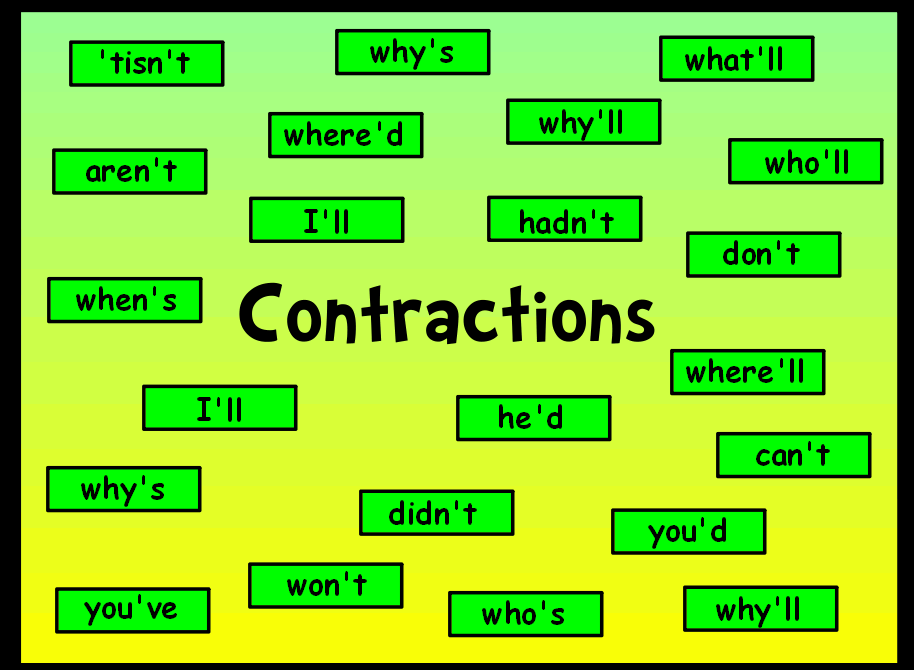
Moreover, I noticed that in the spoken corpus, ‘it’s’ is used to say ‘it is’, which is a contraction we tend to use for the convenience of speech. Also, the word ‘but’ is used quite a lot in the spoken corpus, and now that I think of it, we do use the word ‘but’ frequently in our speech. However, the most frequently used word in the spoken corpus is ‘like’, which I am not surprised by in the slightest. I find it difficult not to use the word ‘like’ in my speech as it is a bad habit of mine.

Image result for contractions in speech

As I mentioned in the start of this b log, please feel free to add to the acknowledgements I made in the comments below. I hope this blog was of use to you and that you now feel more comfortable with the term ‘corpus’!

Until next time,

Alison

Bibliography:

McEnery, T. (2016) ‘What is Corpus Linguistics and how does it contribute to society?’, ESRC, 24 Oct, available: https://blog.esrc.ac.uk/2016/10/24/what-is-corpus-linguistics-and-how-does-it-contribute-to-society/ [accessed 31 Oct 2018].

University of Lancaster (2015) ‘What is corpus linguistics?’ , available: https://www.youtube.com/watch?v=KabH1_Bsx4U [accessed 31 Oct 2018].

ICC and how it has developed in foreign language education..

Hello everyone! Welcome back to my blog.

As you can probably guess from the title, today’s blog post is going to be focused on ICC (Intercultural Communicative Competence) and how it has developed over the years in for foreign language learning. Through this, I will give my take on the following two topics…

1. Firstly, or not I think that ICC is an essential component to learning a second language. Why is it necessary and can we separate language and culture?

2. Secondly, whether or not I think that ICC is essential for our future employability and what are for the reasons  I give. Would we not be desirable to the employer without the trait of being an intercultural communicative speaker?

With regards to whether I think it’s an essential step or not in foreign language learning, all I can say is yes, absolutely. Without a shadow of a doubt, it is borderline impossible to separate language and culture. They go hand in hand. You can’t simply expect to become fully competent in a language if you don’t devote time to exploring the culture of that language in particular, it is a package deal! As discussed in last week’s blog post, often enough we see aspects of a language that were based on the history of that country. History, as you know, is a predominant factor of a country’s culture. It is important to try to develop your international understandings (Koskinen and Tossavainen, 2003) by educating yourself about this history.

Related image

Moreover, when it comes to conversing with native speakers of the language you’re learning, it would be very difficult to truly communicate with them if your weren’t aware of their culture. For example,  because I am Irish, I find it highly offensive when people from foreign countries make a statement such as “The Irish language is a dead language that no one in this country speaks”. I have encountered statements similar to these on many occasions, and all that comes to my mind (other than rage) is that they clearly have not devoted enough time to learning the ins and outs of Irish culture. Otherwise, they would be aware of the outrageous amount of controversy in Ireland about the Irish language and whether or not it is ‘dead’ or not.

Image result for multilingualism

To give my take on the second topic that I have listed above, to be perfectly honest, I think being an intercultural speaker would be an extremely desirable trait for any candidate for a job in this increasingly globalized world (Bhattacharjee, 2012). In this era, professional companies have put such an emphasis on the importance of bilingual/multilingual speakers in a workforce. Now that so much contact is made with people from all over the world, it can only be seen as something profoundly impressive! If two candidates completed an interview for a high position in a business company, who would be more likely to get the job? Person ‘A’, who was a multilingual speaker, with English as a main language and Spanish and German as foreign languages, or person ‘B’, with solely English as a main language. The multilingual speaker immediately has more of an edge, right? It is a very impressive trait to have so yes, to answer the question, I do think it is essential for our future employability.

Image result for interview

I hope you found this blog useful and that you will be joining me next week for my next blog post!

Until then,

Alison

Bibliography:

Bhattacharjee, Y. (2012) ‘Why Bilinguals are Smarter’, Gray Matter, 17 March, available: https://www.nytimes.com/2012/03/18/opinion/sunday/the-benefits-of-bilingualism.html [accessed on 25 Oct 2018].

Koskinen, L. and Tossavainen, K. (2003) ‘Benefits/problems of enhancing students’ intercultural competence’, Intercultural Nursing, 12(6), 369-377, available: https://www.magonlinelibrary.com/doi/pdf/10.12968/bjon.2003.12.6.11245?download=true [accessed on 25 Oct 2018].


‘The Cultura Project’ and how they have exercised Byram’s ICC module..

Hello everyone! Welcome back to my blog.

In this weeks blog I will be discussing ‘The Cultura Project‘ and how they have exercised Byram’s module of Intercultural Communicative Competence (1997) on their website. ICC was discussed in last week’s blog post (feel free to read it, it may make this blog a lot more clear!). I will start by explaining exactly what the ‘The Cultura Project‘ is and what its purposes and uses are.

This international project aids students, like you and I, in learning about different cultures through to talking to natives of different countries. Exchanges are carried out online between students from different universities (and cultures). They are given the opportunity to share perspectives and learn things about the foreign language they are studying.

Image result for different cultures

In the ‘Cultura‘ website, we are given a plethora of ‘past exchanges’ where we can observe the thoughts of those who have previously carried out exchanges in various different languages (Cultura.mit.edu, 1997). Because I am a Spanish language leaner, I chose only Spanish exchanges to assess how they have incorporated Byram’s module of ICC. The predominant ‘savior’ of Byram’s module that I found was most evident in the past exchanges was ‘Attitudes’ (savoir être). All students reacting about their past exchange appear to have a very open-minded and curious attitude, something that Byram’s module of ICC indicates. I feel that you could not possibly be an intercultural speaker without having an open-mind. After all, learning a foreign language leads to a more open-mind with regards to the world and it’s people. For example, students were very curious about the topic of drugs in Mexico and how common they actually are, or if it is just a stereotype. Not only this, they were questioning topics such as what ‘success’ means to Spanish speakers and what family is associated with. Language learning also can inspire an understanding attitude and tolerance, this is important when communicating with people from other countries (Cherian, 2016).

Image result for intercultural speaker

Moving on, the second aspect of Byram’s module of ICC that I felt was prominent in these past exchanges would be ‘Discovery/Interaction’ (savoir appprende/faire). According to Byram, an intercultural speaker has acquired knowledge of a culture and educated themselves on the cultural practices of that country. They use this knowledge that they have of the different culture to communicate and interact with them in an appropriate manner. In the past exchanges, it is clear that they people discussing the various different topics have educated themselves on  the culture of the target language. This, of course, teams up with the ‘Savoir Apprende/Faire’.

Image result for culture

Although I put an emphasis on the two ‘Savoirs’ above, I feel as though each of the five ‘savoirs’ of Byram’s module are incorporated somehow in the interactions seen on ‘Cultura‘. However, these two predominantly stood out for me and because of this, I wanted to discuss these two the most.

I hope you found my blog useful, that’s all for this week! PS: feel free to comment what aspects of Byram’s module you felt was most evident on the ‘Cultura’ ‘past exchanges’ section.

Until next time,

Alison

Bibliography:

Cherian, M. (2016) ‘7 Benefits of learning another language’, Global Citizen, 21 Feb, 1, available: https://www.globalcitizen.org/en/content/7-benefits-of-learning-another-language/ [accessed 19 Oct 2018].

Cultura.mit.edu. (1997). Welcome to Cultura | Cultura. [online] available at: http://cultura.mit.edu/ [accessed 19 Oct 2018].

LeBaron-Earle, F. (2018) ‘Digital Literacies and Intercultural Communicative Competence’, LI4113: Language and Technology, available:https://sulis.ul.ie/portal/site/2910a102-7c6f-4958-883b-13b26b229c5f/tool/1532bc2b-7d10-4f07-9598-f23f4de719e4?panel=Main [accessed 18 Oct 2018].

What makes one an ‘Intercultural speaker/mediator?’

Hello everyone! Welcome back to my blog.

In this weeks blog, I will be discussing the criteria in which I think every intercultural speaker or mediator has fulfilled in order of gaining their title. An intercultural speaker/mediator is someone who is fully capable of communicating with someone from a different language and cultural background (TeachingEnglish | British Council | BBC, 2009). As you all saw in the lab this week, we learned all about Byram’s model of ICC (Intercultural Communicative Competence).  In this, we learned about the five savoirs that Byram identifies with an intercultural speaker:

  1. Interpreting and relating skills are of a high standard (savoir comprende). This means that they would have the ability to translate a complicated document from another culture with ease, for example.
  2. Knowledge (savoir) of other cultures and communities. They know what is an appropriate or non-appropriate way to act while in the company of people from a different culture.
  3. Good attitude. Being open-minded, confident, motivated (savoir etre).
  4. Critical cultural awareness. According to Byram, being an intercultural speaker means being a critical and active thinker (savoir s’engager).
  5. Discovery/Interaction skills (savoir faire), meaning they have a high ability to interact with people from other cultures and communities.

Image result for five savoirs of intercultural communicative competence

I found that Byram’s model of ICC was a perfect description of what it means to be an intercultural speaker or mediator. It highlights that you can not only be fully competent in the language, but that you have to master the nuance of the language also. This is not something that is easily done, or something that a new-language learner can just ‘pick up’. According to Allal-Sumoto, motivation seems to play a big role in acquiring ICC. (Allal-Sumoto, 2018). Personally, I think that it is a title you are granted after years of dedication to the specific language/culture.

Image result for intercultural communication

Although it may appear to be tedious, developing ICC is something I would classify as being very important for a language learner. In order to truly be able to communicate properly with someone from a different country, you must immerse yourself in their culture. Culture is crucial when it comes to a language, I don’t really see it as being ‘optional’ in language learning. The different aspects of a language can be entirely due to the history of a culture, which is why it is a predominant factor of language learning.

I hope you found this blog helpful when it comes to trying to figure out exactly what ICC is. I hope to see you back here next week!

Until next time,

Alison

Bibliography:

  1. Allal-Sumoto, T. (2018). Memoirs of Learning Utility Center for Konan University Students. [Article] Konan University.
  2. TeachingEnglish | British Council | BBC. (2009). Intercultural communicative competence. [online] Available at: https://www.teachingenglish.org.uk/article/intercultural-communicative-competence [Accessed 8 Oct. 2018].
  3. What is INTERCULTURAL COMMUNICATION? What does INTERCULTURAL COMMUNICATION mean?. (2017). Youtube.


My take on Social Networking (Digital Literacies)

Hello everyone! Welcome back to my blog.

In this weeks blog I will talk about digital literacy and what social networks work best for me and why so, the advantages and disadvantages of social networks and a few issues related to social media. I will start off by giving you a short definition of digital literacy, to keep things simple. As we discussed in lectures, digital literacy means having the ability to effectively use and evaluate information. This type of literacy only applies to ‘non-traditional’ sources. For example, social media sites (Heitin, 2016). Personally, throughout the years I have developed my own digital literacy skills by using various social media sites that I will discuss next.

Personally, I am a huge Instagram addict. To be perfectly honest, it doesn’t benefit me in any way education wise, but instead it is what I look at after closing the books for the day. I find it a great way to wind down and interact with friends. For those of you who may not know what it is, its basically a platform where you solely post your pictures/videos for all who follows you to see. Unfortunately it is a very addicting social networking platform and I sometimes find myself scrolling for hours a day. It gives you an insight peoples lives, well, you see only what they want you to see, which is typically all the good things about their lives. Them laughing with friends, going to festivals, on holidays, their new gifts, etc.

As well as Instagram, I find it difficult to go a long time without scrolling through twitter. However,  I find it draining and depressing when I read too many ‘tweets’ about people complaining. Some twitter users decide to leak their whole lives on it, forgetting that once something is on the internet, there is no way of getting rid of it permanently (Fineman, 2014). Saying this it is a great way to share your thoughts with your friends about certain topics. Generally people discuss all sorts of issues or ideas, but I find it good for information on important world issues. It allows you to read the perspectives of others which can open your mind up to different outlooks on world issues. I do however use Facebook occasionally but I find it boring and almost tedious to scroll through as it is now considered outdated by many.

There are many advantages and disadvantages of social networking platforms as we all know, in some cases the disadvantages outweigh the advantages. They tend to be very distracting and have the power to distract you from getting things done. The most concerning disadvantage is the fact that they have a huge impact on people’s mental health (Griffiths, 2018). Instagram for example can make you feel discouraged and unsuccessful when you see how well everyone else is supposedly doing. So much so that a lot of people decide to do a social networking detox and delete them for awhile, which I feel is sometimes necessary. They can potentially but a downer on your day and make you less in touch with the real world. But saying this, social networking can be a great way to get inspired and motivated in life. Also they provide a quick and easy way of connecting with friends.

Plenty of people find themselves in difficult scenarios online, for example, cyber bullying. The advice I would give a friend who is being cyber bullied would be to block the user straight away. It stops things from escalating any further. Also people tend to sometimes post pictures of people without their permission, and in this case, I would kindly ask whoever posted it to take it down. If they did not listen, I would simply report the picture.

That is my take on social media and I hope to see you all back next week!

Until next time,

Alison

Bibliography:

Fineman, M. (2014) ‘What We Post Online is Forever, and We Need a Reminder’, Inc, 24 Nov, available: https://www.inc.com/meredith-fineman/what-we-post-online-is-forever-and-we-need-a-reminder.html [accessed 3 Oct 2018].

Griffiths, M.D. (2018) ‘Addicted to Social Media?’, In Excess, 07 May, available: https://www.psychologytoday.com/us/blog/in-excess/201805/addicted-social-media [accessed 3 Oct 2018].

Heitin, L. (2016) ‘What is Digital Literacy?’, Education Week, 16 Nov, 5-6, available: https://www.edweek.org/ew/articles/2016/11/09/what-is-digital-literacy.html [accessed 3 Oct 2018].


Language Learning Styles and ‘Personalising’ language learning.

Hello everyone! Welcome back to my blog.

Following this weeks lab topic, ‘Language Learning Styles‘, I will evaluate assessment activities for language learning in this blog. I will then highlight what type of learner it caters for. The website that I came across which included a varies of assessment activities is called ‘Memrise‘. Before this, I had never heard of this website. After my research, I was pleasantly surprised with their approach to language learning. Saying this, this is purely because it suited my preferences of learning styles. So, for my readers who tend to learn by using opposite styles to me, I can’t guarantee that you’ll agree!

Image result for memrise spanishImage result for memrise logo

Personally, I am an active learner which means I prefer to try things out an ‘see how it works’ rather than having the ‘let’s think it through first’ approach. This would be what a reflective learner would prefer. While using ‘Memrise‘, it is clear that it caters more so for active learners (like myself), rather than reflective learners. You are prompted to choose the correct option for the word that ‘pops’ up. For example, if the word ‘gato’ appears, you must choose out of four options the correct answer in English, which would be ‘cat’. Their tactic is using memory activities to help you remember what you have learned. If I could personalize this assessment activity, I would make it slightly more difficult. Even after choosing the ‘advanced Spanish’ option, words such as ‘hola’, and ‘adiós’ were still appearing. By making this assessment activity more challenging, I could potentially increase how much I can learn from it, which is an advantage to personalizing any app.

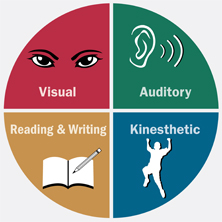
A personalized learning app is very important to me. For starters, we all learn differently and not everything works for each of us. Some of us may be visual learners, which is the most common type of learning style (Hansen, 2018), whereas others may be verbal learners for example. I am a verbal learner, so with regards to ‘Memrise‘, it happens to suit my learning style. It is pretty much all based on verbal learning, despite the fact that they have videos of native Spanish speakers saying pronouncing the words. Saying this, I think its important to try and adapt to other learning styles, because you won’t always be able to choose how you learn. Take this as an example, if you are told to use a certain website to complete an assignment. Even if you are a sensing and verbal learner, that chosen website might have a completely different approach to language learning.

Image result for learning styles Image result for language learning styles

Of course, there are advantages and disadvantages of personalizing an app. Firstly, if you personalize it, it will be perfectly tailored to your usual learning needs, you will most likely learn quicker and more beneficially. On the other hand, as I mentioned in the last paragraph of this blog, it is important to be open to learning in new, perhaps foreign ways. If you take the time to adapt to other learning styles, you could end up being just as suited to that style.

Learning about the various learning styles was of great interest to me. I learned things about my preference of learning that I was unaware of previously. I hope you felt the same, and that you enjoyed reading my take on learning styles!

Until next time,

Alison

Image result for learning styles

Bibliography:

Cooke, E., Detre, G., and Whately, B. (2010) Memrise, available: https://www.memrise.com [accessed 27 Sep 2018].

Hansen, B. (2018) ‘Your Guide to Understanding and Adapting to Different Learning Styles’, ‘Lifelong Learning Matters’, 6 April, available: https://www.cornerstone.edu/blogs/lifelong-learning-matters/post/your-guide-to-understanding-and-adapting-to-different-learning-styles [accessed 27 Sep 2018].

An Evaluation of my Chosen CALL Package, 123Teachme

Hello everyone! Welcome back to my blog.

This week, my aim is to provide you with an in depth evaluation of ‘123TeachMe’. This CALL package is new to me, and I have only recently began availing of the sources provided on it. As I said in my last blog, I am impressed by this website as it provides fun and easy ways to improve your foreign language.

To get started, I am going to rank the aspects of a CALL package in order of importance to me, as discussed in the Linguistics lab (LeBaron, 2018). I will then discuss to what extent ‘123TeachMe’ excels in each chosen area. Firstly, let’s discuss ‘language learning potential’. This aspect for me is profoundly important. How much we as students can potentially learn from the website is a predominant factor of the like-ability of the website. Right? For example, is there grammar drills available as well as grammar rules? Are section quizzes/assessments provided? Is a pronunciation section accessible on the site?

Image result for 123teachme

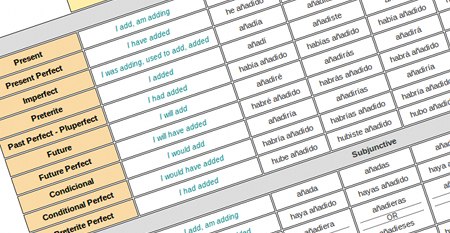
In ‘123Teachme’s’ case, I found it excelled in the grammar section. I was able to easily access hundreds of different verb conjugations, perfectly organised and easy to follow. They also gave in depth explanations of irregular verb rules, something that many learners can find challenging. This means that you and I, or anyone who chooses to learn from this website can potentially improve their grammar a substantial amount. Personally, I was very impressed with the pronunciation section provided on this site as I feel that a lot of language learning sites do not provide this. Correct pronunciation is vital in any language, so this aspect of the website is noteworthy!

Image result for 123teachme grammar

Moving on, next is ‘error correction and feedback’. While learning a language, it is far too easy to pick up bad habits. Because of this, it is so important to be able to correct any mistakes and to be given feedback on what to improve on, etc. I wasn’t overly impressed with the error correction process on ‘123TeachMe’. In fact, I was quite disappointed. They offer free tests to test your level of Spanish, and by doing this they give you a maximum of ten questions per section. The sections include grammar, listening skills, verbs and vocabulary. However, if you choose the wrong answer, they do not tell you which one was right. Saying this, when they give you your results they do provide links in the areas you need to improve on.

The last aspect that I’d like to use to evaluate my chosen CALL package, ‘123TeachMe’, is ‘learner control’. Personally speaking, I like to be fully in control of what I access on a website and in relation to ‘123TeachMe’, I was pleased with the level of learner control. It is a free website and by paying nothing you can still access all the sources which I see as being a big advantage. This is a rare aspect of a website these days, as we all know, so it is greatly appreciated when they are actually ‘free’. It is possible to be paying up to 159 euro a year for Rosetta Stone (a language course website) (Harris, 2017).

I hope this evaluation gave you an idea of the level of service ‘123TeachMe’ offers and I hope to see you back next week!

Until next time,

Alison

Image result for 123teachme

Bibliography:

Harris, A. (2017). ‘Can you learn a foreign language online?’, The Irish Times, Apps and web tutors claim to offer a cheap way to gain fluency- but are they effective?, 30 May, 3.

LeBaron,F. (2018). ‘Personalising the use of technology for SLA’, L14113: Language Technology, available: https://sulis.ul.ie/access/content/group/2910a102-7c6f-4958-883b-13b26b229c5f/Labs/LI4113_Lab_3_tasks.pptx %5Baccessed 28 Sep 2018].

123teachme.com. (2018). Study Spanish Free Online. [online] Available at: https://www.123teachme.com [accessed 28 Sep 2018].